
CMPA Symptoms in Babies: The Signs, the Timeline, and Breastfeeding
Mucus in the nappy. Eczema that flares for no obvious reason. Feeds that end in arching and screaming. And somewhere along the way someone — your GP, a health visitor, another parent online — mentions CMPA.
If you're breastfeeding and your baby has never had formula, that can be confusing: how can a baby react to milk they've never drunk? This guide covers what CMPA is, the signs to look for, when they start and how long they last — and what changes when you're breastfeeding.

What CMPA Is
CMPA stands for cow's milk protein allergy: an immune reaction to the proteins in cow's milk, mainly casein and whey. It isn't lactose intolerance, which is a problem digesting milk sugar and is genuinely rare in babies.
How common it is depends on who's counting. Estimates for the first year of life range widely, but studies that confirm the diagnosis with a proper milk challenge find it in under 1% of young children (North Yorkshire CMPA guideline), and in around 0.5% of exclusively breastfed babies (WAO DRACMA guideline). CMPA is real and worth taking seriously — and it's also over-diagnosed, which is why confirming it properly matters.
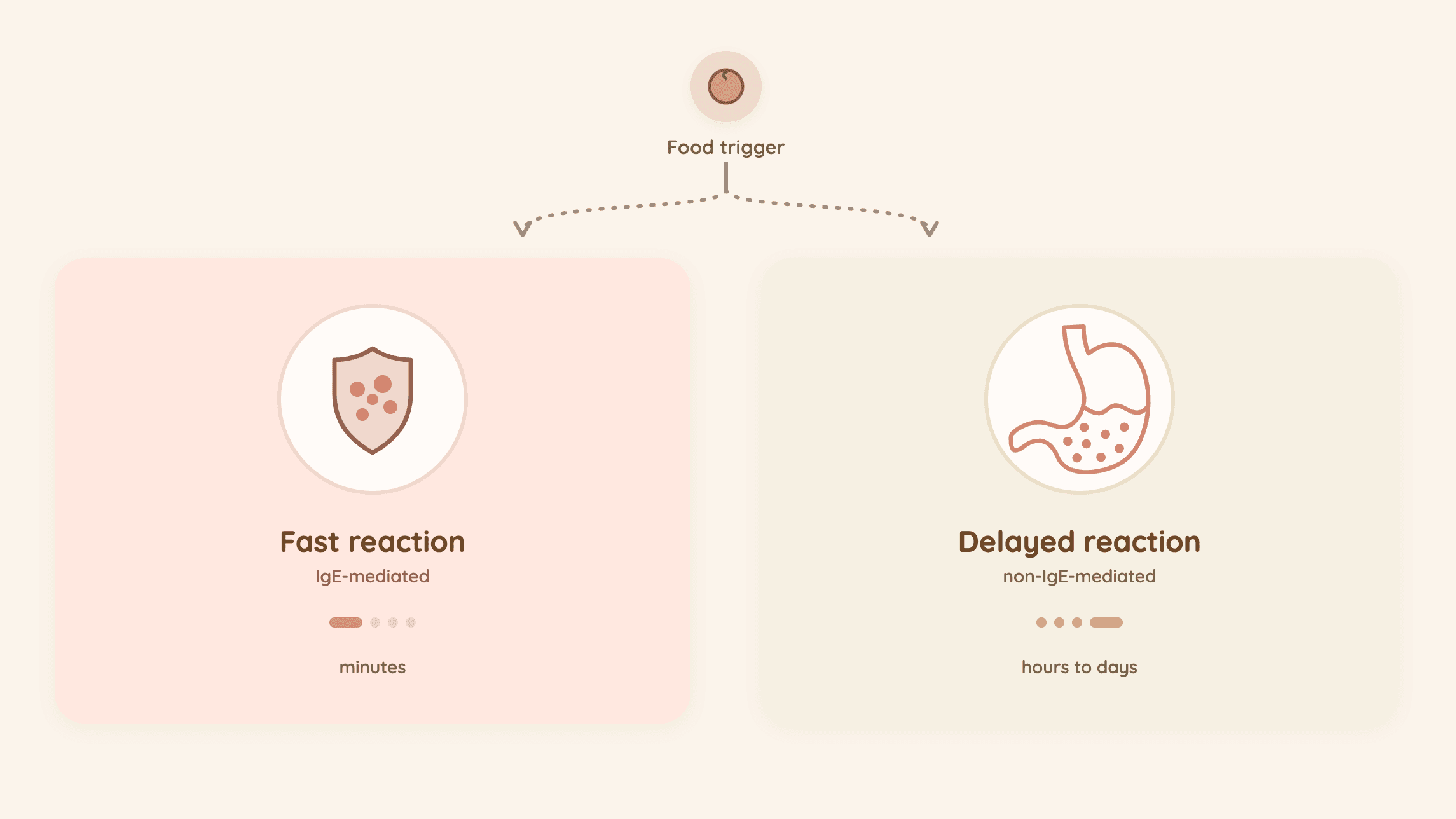
Two Patterns: Fast and Slow
IgE-mediated CMPA is fast. Hives, swelling and vomiting usually start within minutes to two hours of milk.
Non-IgE-mediated CMPA is slow. Symptoms usually appear 2 to 72 hours after milk and build gradually rather than all at once (Nottinghamshire CMPA guidance). This delayed type is the one most often behind symptoms in breastfed babies — and the one that's hardest to spot.
The Signs of CMPA
Because the delayed type is the more common one, most signs are gradual and centre on the gut and the skin. Guidance looks for several of these together (Nottinghamshire CMPA guidance):
- Gut: reflux or vomiting, colic-like crying, mucus or streaks of blood in stools, loose or more frequent stools, or constipation with lots of straining
- Skin: itching, flushing, rashes, or eczema that keeps coming back
- Feeding: refusing feeds, or feeds that end in distress
- Growth: in more significant cases, slow weight gain — covered in can CMPA cause slow weight gain
No single sign means CMPA. Lots of babies have reflux, wind or a patch of eczema with no allergy at all. What raises suspicion is several of these appearing together and persisting — especially if they haven't responded to the usual treatments.
Fast reactions — hives, swelling of the lips or face, difficulty breathing, sudden paleness or floppiness — are less common in breastfed babies, but they're an emergency. Call 999 or go to A&E straight away.
CMPA in Newborns
CMPA usually shows up early: most affected babies have symptoms by six months, and it rarely starts after the first birthday (North Yorkshire CMPA guideline). In formula-fed babies it tends to appear once cow's milk formula starts. In breastfed babies it can appear in the first weeks.
One newborn pattern catches a lot of parents off guard: a baby who seems well, feeds happily and is growing, but has streaks of blood or mucus in their stools. Doctors call this FPIAP — food protein-induced allergic proctocolitis — a mild delayed milk allergy affecting the lower bowel. It usually starts at one to four weeks old, mostly in breastfed babies, and typically settles once dairy is removed from the mother's diet (North Yorkshire CMPA guideline). Blood in a baby's nappy always needs checking by your GP — but in a thriving baby, this is often the explanation.
FPIAP shouldn't be confused with FPIES, a rarer and more serious reaction involving repeated, forceful vomiting a few hours after a food — covered in FPIES in infants.
When Symptoms Start, and How Long They Last
After you eat dairy: for the delayed type, symptoms usually appear 2 to 72 hours later. Because dairy turns up in so many meals, most parents eat it several times within that window — which is what makes the culprit meal almost impossible to pin down from memory. Some symptoms, eczema especially, build over several days of exposure rather than tracing back to one meal.
After you cut dairy: improvement is gradual, not overnight. That's why a diagnostic trial usually lasts two to four weeks. If symptoms haven't clearly improved after a strict trial, CMPA becomes unlikely and your GP will look at other causes (North Yorkshire CMPA guideline).
Over the longer term: most children outgrow it. The delayed type is usually outgrown much sooner than the fast type — often by around 18 months to two years (North Yorkshire CMPA guideline). That's why reintroduction is the goal rather than lifelong avoidance — covered in reintroducing dairy while breastfeeding.
How Milk Protein Reaches a Breastfed Baby
When you eat or drink something containing cow's milk, small fragments of milk protein can end up in your breast milk within a few hours. For most babies this makes no difference at all. For a baby with a developing sensitivity, even that small amount can be enough to cause symptoms — which is how CMPA can appear in a baby who has never had dairy directly.
The usual approach is to remove dairy from your own diet and keep breastfeeding, not to stop. What that diet involves — including the label words that mean milk — is in CMPA and breastfeeding: what to avoid.
How CMPA Is Diagnosed
For the delayed type there's no reliable skin or blood test. Diagnosis comes from removing cow's milk protein for a few weeks — from your diet if you're breastfeeding — and then reintroducing it to confirm. The whole process is in how CMPA is diagnosed in babies.
Tracking Makes the Difference
"He's been better since I cut dairy" is a reasonable starting observation, but it isn't the kind of evidence that helps a clinician make a confident call — plenty of things could explain a few better days. What helps is a log covering both sides: what you ate, and what your baby's symptoms were, day by day, through the whole elimination and reintroduction.
These observations are based only on patterns in your own log. They are not medical advice — always check with a healthcare professional about suspected CMPA or any food allergy.
Turning This Into a Record You Can Use
Whatever's behind your baby's symptoms, the thing that identifies it is the same: a written record of what was eaten and what happened, with times attached. Memory doesn't hold up across three days of this — and "I think it's dairy" isn't something a GP can act on. A log is.
On paper: A free printable food and symptom diary - one version for breastfeeding, which tracks your food and your baby's side by side, and one for formula and solids. One page per day, print at home, no signup and no email.
→ Get the free printable diary
In the app: LittleClues does the same thing with the timing built in: foods and symptoms logged on their own separate timelines, with the app ranking which foods are most likely behind the reactions. Free on iOS and Android.
Frequently Asked Questions
What are the first signs of CMPA in a baby?
Usually gut or skin symptoms that build gradually: reflux or vomiting, mucus or blood in stools, loose stools or straining, colic-like distress around feeds, or eczema that won't settle. No single sign confirms CMPA — it's several together, persisting, that raises suspicion.
When do CMPA symptoms start?
Usually early — most affected babies have symptoms by six months, and onset after the first birthday is rare. Breastfed babies can show signs in the first few weeks; formula-fed babies usually once cow's milk formula is started.
Can a breastfed baby have CMPA if they've never had formula?
Yes. Cow's milk protein from the mother's diet can pass into breast milk in small amounts, which is enough to trigger a reaction in a sensitive baby even though they've never had dairy directly.
How long after mum eats dairy do CMPA symptoms appear?
For the more common delayed type, usually 2 to 72 hours later. Symptoms can also build up over several days of exposure rather than tracing back to a single meal.
How long do CMPA symptoms take to go away after cutting dairy?
Improvement is gradual, which is why a diagnostic trial usually runs two to four weeks. If there's no clear improvement after a strict trial, your GP will look at other explanations.
Do I have to stop breastfeeding if my baby has CMPA?
No. The standard approach is for the breastfeeding mother to remove cow's milk protein from her own diet so breastfeeding can continue. Stopping breastfeeding is rarely necessary.