
Baby Rash After Eating: Is It a Food Allergy?
Your baby ate something new. An hour later there's a rash around their mouth, or on their cheeks, or spreading across their tummy. Your first instinct is probably: food allergy.
Sometimes that instinct is right. Often, though, the picture is murkier than it looks — and understanding what you're actually seeing makes a big difference to how you respond.
Not Every Rash After Eating Is an Allergy
This sounds obvious, but it's easy to forget when you're in the moment. A few things cause rashes around mealtimes that have nothing to do with the food itself:
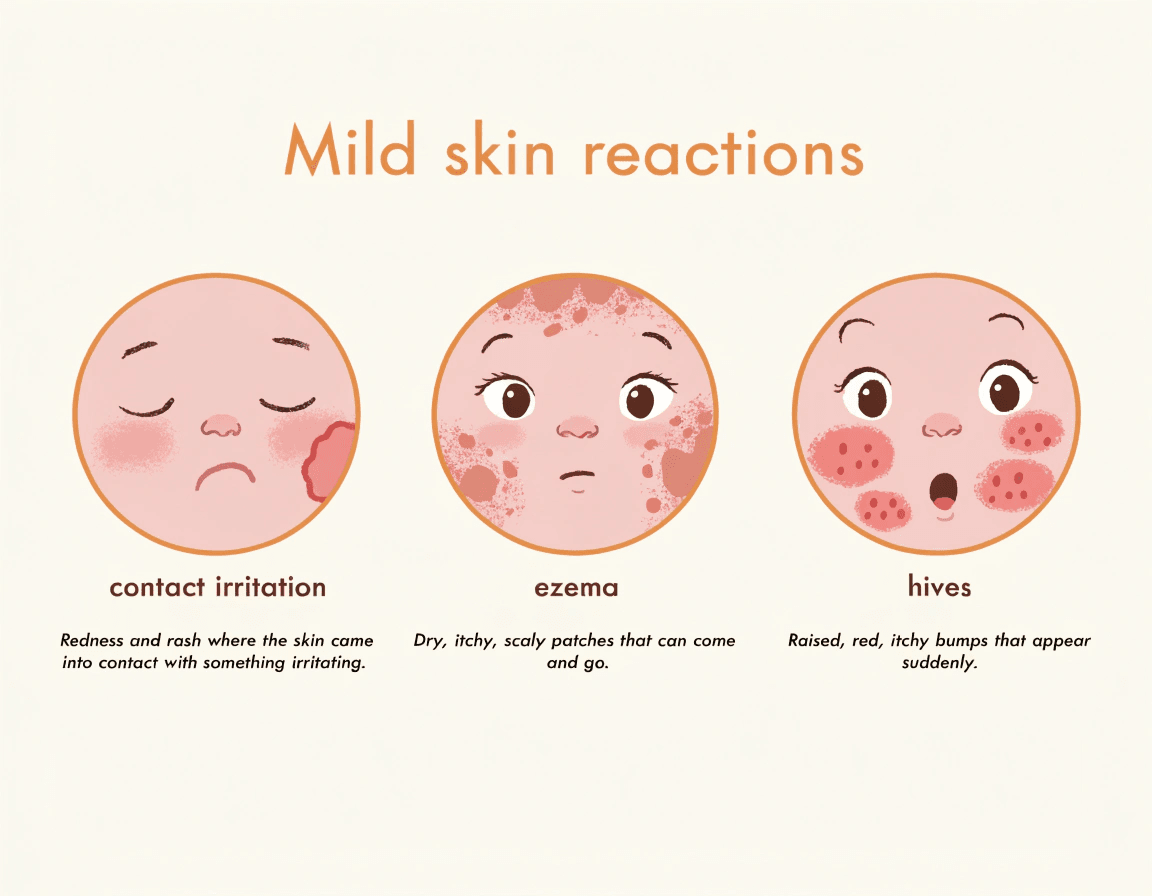
Contact rash from acidic foods. Tomatoes, citrus, strawberries, and pineapple are common culprits. The acid irritates the skin around the mouth, lips, and chin — especially in babies with sensitive skin. It looks red and blotchy, appears within minutes of eating, and usually fades within an hour. It isn't an allergic reaction. It's just irritation.
Drool rash. Babies drool. A lot. Wiping a wet face repeatedly with a cloth creates friction and irritation that can look like a food reaction, especially around the chin and neck folds.
Eczema flares. Some babies have eczema that flares unpredictably. If a flare happens to coincide with a new food, it can look like a reaction — but eczema has its own rhythm and isn't always triggered by what's just been eaten.
None of these are nothing — they're worth knowing about and mentioning to your GP if they're frequent. But they're not food allergies.
What a Food Allergy Rash Actually Looks Like
Allergic skin reactions tend to look different from the above. The most common signs:
Hives (urticaria). Raised, red, itchy welts that appear suddenly — often within minutes to an hour of eating the trigger food. They can appear anywhere on the body, not just near the mouth. Hives that come and go and move around the skin are a classic allergic response.
Widespread redness and swelling. An allergic reaction can cause flushing and puffiness, particularly around the eyes, lips, or face.
Eczema worsening over days. Food allergies, particularly to dairy or egg, can make underlying eczema significantly worse. This doesn't happen immediately after a meal — it tends to build over days of exposure, which makes it harder to connect to a specific food.
If you see hives, significant swelling, or any signs that your baby is having trouble breathing or swallowing — that is a medical emergency. Call emergency services immediately.
The Timing Problem
One of the hardest things about food allergy rashes is that the timing isn't always obvious. Immediate reactions — the hives-within-an-hour type — are easier to connect to a cause. But delayed reactions are common, especially in young babies.
In breastfed babies, a reaction can come from something you ate, filtered through breast milk. That can show up as a skin reaction 12 to 72 hours after you ate the food — by which point you've eaten plenty of other things too, and the connection is genuinely difficult to see.
This is why logging matters so much. If you're writing down what your baby eats and when symptoms appear, you have data to look back at. Without a log, you're relying on a stressed parent's memory to spot a pattern across dozens of meals and dozens of symptoms — and that's really hard.
What to Do When You Suspect a Food Reaction
Don't panic, but don't dismiss it. Write down exactly what happened: what was eaten, when, what the rash looked like, where it appeared, how long it lasted.
Keep logging going forward. One data point doesn't tell you much. If the same food causes a similar rash multiple times, that's a pattern. If it happened once and never again, it may have been coincidence or a different cause.
Talk to your GP or health visitor. They can help you decide whether a referral to a paediatric allergist is appropriate. If your baby has had a significant reaction — hives, swelling, difficulty breathing — see a doctor that day.
Don't do a home elimination diet without guidance. Removing dairy, egg, or wheat from your baby's diet (or your own if breastfeeding) has nutritional implications. A paediatric dietitian can help you do this safely.
These observations are based only on patterns in your own log. They are not medical advice — always check with a healthcare professional about suspected allergies.
Turning This Into a Record You Can Use
Whatever's behind your baby's symptoms, the thing that identifies it is the same: a written record of what was eaten and what happened, with times attached. Memory doesn't hold up across three days of this — and "I think it's dairy" isn't something a GP can act on. A log is.
On paper: A free printable food and symptom diary - one version for breastfeeding, which tracks your food and your baby's side by side, and one for formula and solids. One page per day, print at home, no signup and no email.
→ Get the free printable diary
In the app: LittleClues does the same thing with the timing built in: foods and symptoms logged on their own separate timelines, with the app ranking which foods are most likely behind the reactions. Free on iOS and Android.
Frequently Asked Questions
My baby got a rash after eating. Is it definitely a food allergy?
Not necessarily. Rashes after eating can be caused by contact irritation from acidic foods, drool, eczema flares, or heat — none of which are allergic reactions. A food allergy rash typically looks like hives (raised, itchy welts) that appear quickly and can spread beyond the mouth area. If you're unsure, log what happened and discuss it with your GP.
How quickly does a food allergy rash appear?
Immediate allergic reactions usually appear within minutes to 2 hours of eating the trigger food. Delayed reactions, particularly eczema worsening, can take 24–48 hours or longer to show up. In breastfed babies reacting to something in the mother's diet, the delay can be even longer.
What foods most commonly cause rashes in babies?
The most common food allergens in babies and toddlers are cow's milk, egg, peanut, tree nuts, wheat, soy, fish, and sesame. Cow's milk and egg account for the majority of food allergies in infants.
When should I take my baby to A&E for a rash?
Go immediately if the rash is accompanied by swelling of the lips, tongue, or throat; difficulty breathing or swallowing; persistent vomiting; or if your baby becomes pale, floppy, or loses consciousness. These are signs of anaphylaxis, which is a medical emergency.
Can breastfeeding cause a food allergy rash in my baby?
Yes. Food proteins from the mother's diet can pass through breast milk and trigger reactions in sensitive babies. Common culprits include cow's milk, egg, soy, and wheat. If you suspect this, speak with a healthcare professional before eliminating foods from your own diet.